Your Dubai Home Feels Like a Shoebox? Here’s How Sliding Doors Actually Fix the Problem

You walk into your Dubai apartment after paying premium rent, and what’s particularly irritating is that you can barely move around without bumping into furniture. Traditional doors eat up precious square footage, making your already expensive living space feel even more cramped than a hotel room.
If you’ve ever tried opening your bedroom door while someone’s sitting on the couch — a familiar situation, right? — you understand the daily frustration millions of Dubai residents face. Every morning becomes a choreographed dance around swinging doors that, frankly, shouldn’t exist in a city where rent costs more per square foot than Manhattan.
The solution isn’t moving to a bigger place (good luck affording that). It’s understanding how sliding doors in Dubai can, quite literally, give you back the space you’re already paying for.
- 1. The Real Math Behind Your Space Problem
- 2. Types That Actually Work in Dubai’s Climate
- 3. Installation Reality Check (What Actually Happens)
- 4. The Money Question: Real Costs and Returns
- 5. Choosing Suppliers Who Actually Deliver
- 6. Common Mistakes That Cost Money
- 7. Real Homeowner Experiences
- 8. Taking Action: Your Next Steps
The Real Math Behind Your Space Problem
Let me paint you a picture. Standard hinged doors require a 90-degree swing radius — that’s roughly 6-8 square feet of unusable floor space per door. In a typical 2-bedroom Dubai apartment, we’re talking about 30-40 square feet of wasted space. At Dubai’s current rental rates, you’re essentially paying AED 3,000-4,000 annually for… nothing.
Sliding mechanisms, however, eliminate this waste entirely. The door panel moves parallel to the wall, and what’s interesting is that you instantly reclaim that floor area for actual living.
Sarah Thompson, who lives in a Marina apartment (and agreed to share her experience), put it perfectly: “After installing sliding doors between my living room and bedroom, I could finally fit a proper dining table. It sounds small, but it changed how I use my entire home.”
Types That Actually Work in Dubai’s Climate
Now, here’s where things get interesting — and where many people make mistakes. Not every sliding door type survives Dubai’s unique challenges.
Glass Panels: The Marina Favorite
Glass sliders dominate Dubai’s luxury developments for good reason. They create visual continuity that makes spaces appear larger than they actually are — a neat psychological trick that, it must be noted, works remarkably well in compact apartments.
The key is choosing the right glass. Single-pane options might save money upfront, but they’ll cost you in cooling bills. Double-glazed units, though pricier, can reduce your AC costs by 15-20% during peak summer months. Smart glass technology — where panels transition from clear to opaque — offers privacy without sacrificing that open feeling Dubai residents crave.
Wood: Not What You’d Expect
Wooden sliders surprise many Dubai newcomers. Quality hardwood options like teak or mahogany handle climate-controlled environments beautifully, and what’s more important is that they provide sound insulation that glass simply can’t match.
Ahmed Al-Rashid, a contractor with 15 years of Dubai experience, shared something fascinating: “Wooden sliding doors in bedrooms reduce noise transfer by up to 60% compared to glass. In buildings with thin walls — and let’s be honest, that’s most of them — this makes a huge difference for sleep quality.”
Aluminum: The Practical Choice
Here’s what nobody tells you about aluminum frames: they’re virtually maintenance-free in Dubai’s dust-heavy environment. While other materials require regular cleaning and adjustment, quality aluminum systems keep functioning smoothly for years.
The aesthetic works particularly well in modern developments around Business Bay or DIFC, where clean lines matter more than traditional warmth.
Installation Reality Check (What Actually Happens)
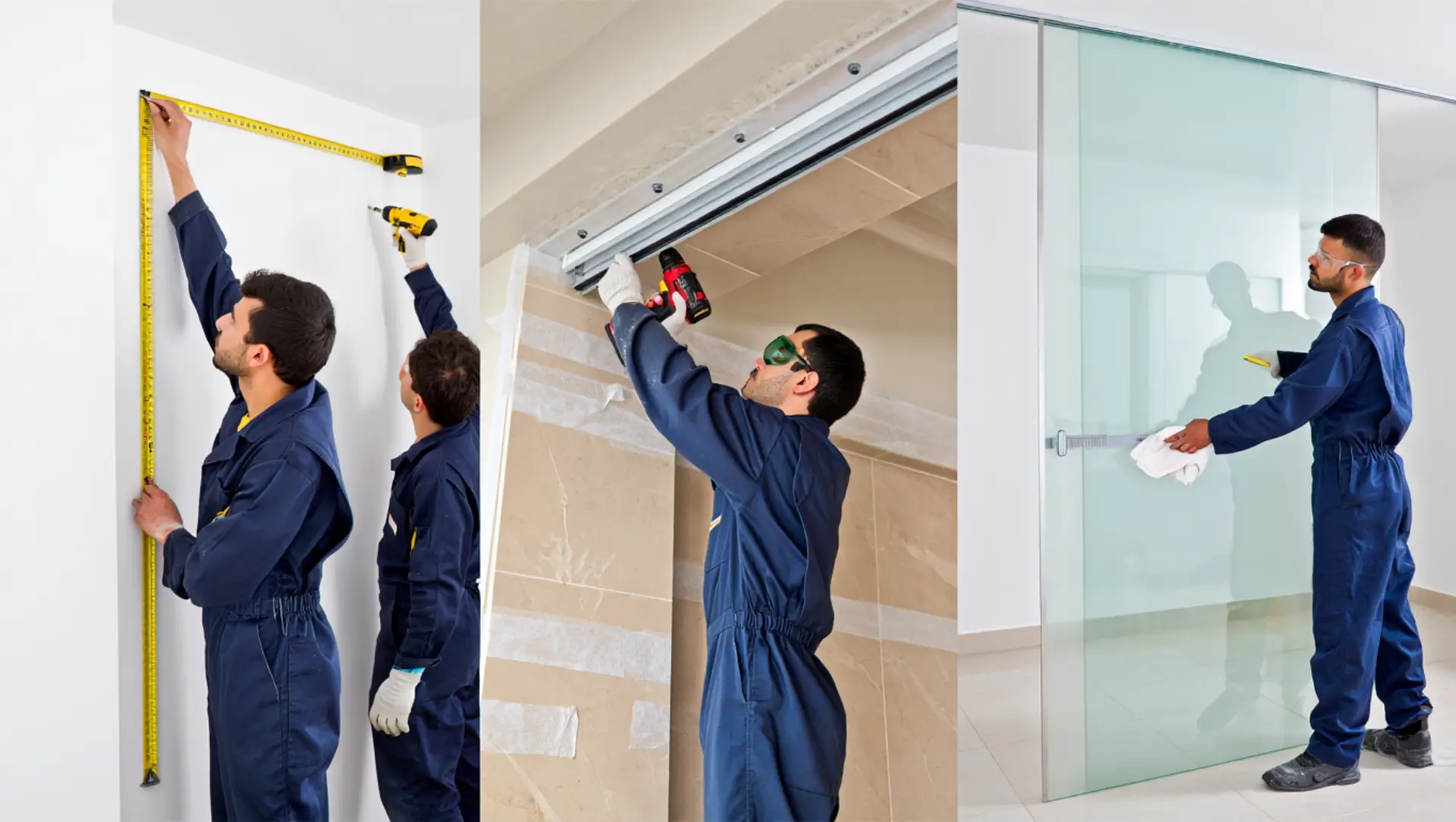
Getting sliding doors installed in Dubai involves more bureaucracy than most people expect — but this shouldn’t stop you. Here’s the real process:
Permits and Permissions
Dubai Municipality requires approval for structural modifications, even minor ones. The good news? Most sliding door installations don’t count as structural changes if you’re not altering load-bearing elements. Still, check with your building management first — some buildings have specific requirements about modifications.
Professional Installation is Non-Negotiable
I’ve seen DIY disaster stories that cost more to fix than professional installation would have cost originally. Licensed contractors understand Dubai’s building codes, and moreover, they provide warranties that protect your investment.
Expect the installation process to take 1-2 days for a typical apartment. Quality installers will protect your floors and furniture — something especially important given Dubai’s persistent dust situation.
The Money Question: Real Costs and Returns
Let’s talk numbers — specific figures that actually matter.
Upfront Investment
Basic aluminum sliding doors start around AED 1,500-2,500 per door, including installation. Mid-range glass options run AED 3,000-5,000, while premium hardwood or smart glass systems can reach AED 8,000-12,000.
Before you wince at those prices, consider this: quality sliding doors typically increase property values by 3-5%. In Dubai’s market, that often covers your entire investment when you eventually sell or move.
Operating Savings
Energy efficiency improvements alone can save AED 200-400 monthly on cooling costs during summer months. Over five years, that’s AED 12,000-24,000 in savings — often enough to pay for the entire project.
Space Value
Here’s a calculation most people miss: if sliding doors allow you to downsize from a 2-bedroom to a 1-bedroom while maintaining the same functionality, you could save AED 20,000-40,000 annually in rent. Even staying in the same unit, the improved livability has real value.
Choosing Suppliers Who Actually Deliver
Dubai’s sliding door market includes everything from fly-by-night operators to premium suppliers — and the difference between them is enormous.
Warning Signs to Avoid
If a supplier can’t show you completed projects in buildings similar to yours, walk away. If they push for full payment upfront, definitely walk away. Quality suppliers understand that trust builds through demonstrated competence, not aggressive sales tactics.
What Good Suppliers Offer
Reputable companies provide detailed consultations that include measuring your space, discussing usage patterns, and explaining maintenance requirements. They should offer multiple material options with honest pros and cons for each.
Most importantly, they’ll handle permit applications and coordinate with your building management — services that, honestly speaking, save more headaches than you can imagine.
Common Mistakes That Cost Money
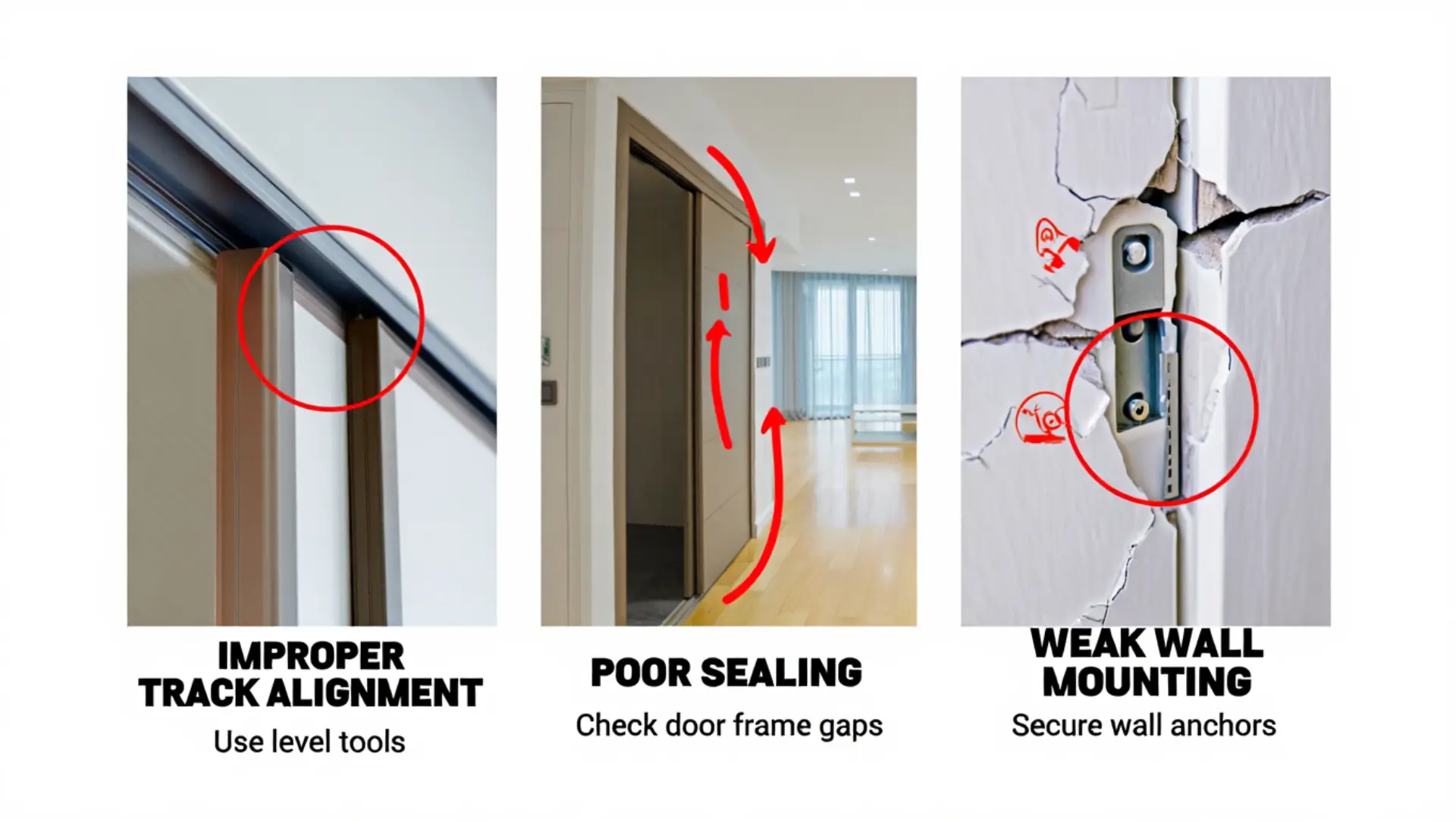
After talking with dozens of Dubai residents who’ve installed sliding doors, certain patterns emerge. Here are the expensive mistakes you can avoid:
- Skimping on track quality. Cheap tracks wear out quickly in Dubai’s dusty environment, creating expensive repair situations within 2-3 years.
- Ignoring sound requirements. Glass looks great but might not provide the privacy you need between bedrooms and living areas.
- Overlooking maintenance access. Beautiful flush-mounted tracks become problems when they need cleaning or adjustment.
- Choosing style over function. Ultra-modern designs sometimes sacrifice practical durability for aesthetic appeal.
Real Homeowner Experiences
Mark Chen, who renovated his Downtown apartment last year, described his experience: “The installation took two days, and yes, there was some dust and disruption. But within a week, I couldn’t imagine living with regular doors again. The space feels twice as large.”
Lisa and James Rodriguez faced a different challenge in their Jumeirah Village Circle townhouse: “We needed to separate the kids’ play area from the main living space without permanent walls. Sliding doors let us open everything up when we’re entertaining but create privacy when needed.”
These aren’t unique stories — they’re typical results when sliding doors are properly planned and installed.
Taking Action: Your Next Steps
If you’re tired of navigating around doors in your cramped Dubai home, here’s what to do immediately:
This week: Measure your current door swing areas and calculate how much floor space you’re losing. Take photos of your layout.
Next week: Contact 2-3 reputable suppliers for consultations. Good ones won’t charge for initial assessments.
Within a month: Make your decision and schedule installation. Dubai’s cooler months (October through March) offer the most comfortable installation conditions.
The space you reclaim through sliding doors won’t just improve your daily comfort — it’ll fundamentally change how you use and enjoy your Dubai home. In a city where every square foot costs premium prices, that’s not just an improvement — it’s smart economics.
Stop accepting cramped living as normal. Your Dubai home, regardless of size, can work better for you starting today.