Complete Dubai Property Ownership Guide: From 100% Foreign Investment to Golden Visas

Anyone who’s tried navigating Dubai’s property market knows the headache. Conflicting advice from agents, confusing legal jargon, and endless questions about what foreigners can actually own – it’s enough to make your head spin. The reality is that most international buyers get stuck in analysis paralysis, spending months researching instead of investing. Whether you’re eyeing luxury apartments, townhouses in Dubai, or commercial spaces, the maze of regulations and requirements can feel overwhelming. But here’s the thing: Dubai’s property laws are actually more straightforward than most people realize.
Understanding Dubai’s 100% Foreign Ownership Reality
Back in 2002, Dubai made a bold move that changed everything. The emirate threw open its doors to foreign property buyers, and honestly, it was a game-changer. Unlike places where you need local partners or complex corporate structures, Dubai keeps things refreshingly simple. You can own property outright – no strings attached, no hidden catches.
The designated freehold areas cover most of what people actually want to buy anyway. Dubai Marina with its waterfront lifestyle, Downtown Dubai where the action happens, Palm Jumeirah for those Instagram-worthy addresses – these zones represent roughly 70% of the residential market. The ownership rights are identical to what locals get, which means you can renovate, rent out, sell, or pass the property down to your kids without jumping through bureaucratic hoops.
Numbers tell the story better than marketing brochures. Dubai Statistics Center reported that foreign buyers accounted for 68% of property transactions in late 2024, pumping AED 147 billion into the market in just three months. That’s not speculation money – that’s serious investment capital from people who’ve done their homework. The Dubai Land Department handles all registrations, so there’s a proper paper trail and legal protection backing every purchase.
What makes this particularly attractive is the absence of corporate ownership requirements that plague other international markets. No need for offshore companies, no annual filing fees, no wondering if your ownership structure will survive regulatory changes. You buy the property, your name goes on the deed, done. It’s the kind of straightforward approach that makes Dubai stand out in a world of increasingly complex international real estate markets.
Investment Limits and Portfolio Building Strategies
Here’s something that surprises most people: Dubai doesn’t cap how many properties foreigners can own. Zero limits. Your only constraints are financial capacity and how much due diligence you can handle. This opens up portfolio strategies that simply aren’t possible in most international markets.
Entry points vary dramatically depending on what you’re after. A studio in Jumeirah Village Circle might run AED 500,000, while penthouses in Emirates Hills can hit AED 50 million or more. Commercial property in Dubai spans an even wider range – small retail units in emerging areas versus prime office space in DIFC represent completely different investment categories. The sweet spot for most international investors seems to be the AED 1-5 million range, where you get decent properties in established areas without breaking the bank.
Smart investors spread their bets across property types. Data from the Real Estate Regulatory Agency shows successful portfolios averaging 3.2 properties, mixing rental income generators with appreciation plays. This isn’t rocket science – it’s basic risk management. Some properties throw off steady cash flow, others appreciate faster, and the combination smooths out the bumps that come with any real estate market.
Financing opens up even more possibilities. Local banks like Emirates NBD offer mortgages up to 75% for residents, 50% for non-residents, with rates starting around 2.8%. Several banks have dedicated foreign investor programs that streamline approvals and provide English-speaking relationship managers. The key is shopping around – different banks have different appetites for various property types and borrower profiles.
Visa Benefits Through Property Investment
Property investment in Dubai comes with a bonus that most markets can’t match: legitimate residency options. This isn’t some citizenship-by-investment scheme with questionable legal standing. The UAE government actively promotes these programs because they bring in capital and talent.
The basic investor visa kicks in at AED 750,000 in property investment. Two-year renewable residency, ability to sponsor family members, no employment required. For families relocating or investors wanting flexibility, it solves the constant visa renewal hassle that plagues many expat destinations. The process typically takes 2-3 weeks once you have your property documents sorted.
Dubai’s Golden Visa program requires AED 2 million in property but delivers a 10-year renewable residency. That’s nearly a decade of stability, with the ability to sponsor parents, unlimited travel, and access to government services. Recent statistics from the General Directorate of Residency show a 127% increase in property-based visa applications during 2024, with Americans and Europeans making up 43% of applicants.
The visa application process runs parallel to property purchase, not after it. Smart buyers coordinate both processes to minimize delays. Required documents include property deeds, passport copies, medical certificates, and health insurance proof. The Central Bank of the UAE provides detailed financial documentation guidelines that eliminate guesswork about what banks and authorities expect.
What’s often overlooked is the practical value of UAE residency beyond just living there. Banking becomes easier, business setup is streamlined, and you get access to the UAE’s extensive network of international agreements and treaties. For entrepreneurs and business owners, the residency often pays for itself through improved access to regional markets and banking services.
Freehold vs. Leasehold: Strategic Investment Considerations

The freehold versus leasehold debate matters more than most people realize. While both offer legitimate investment opportunities, the choice affects everything from financing options to exit strategies. Understanding the nuances helps avoid expensive mistakes down the road.
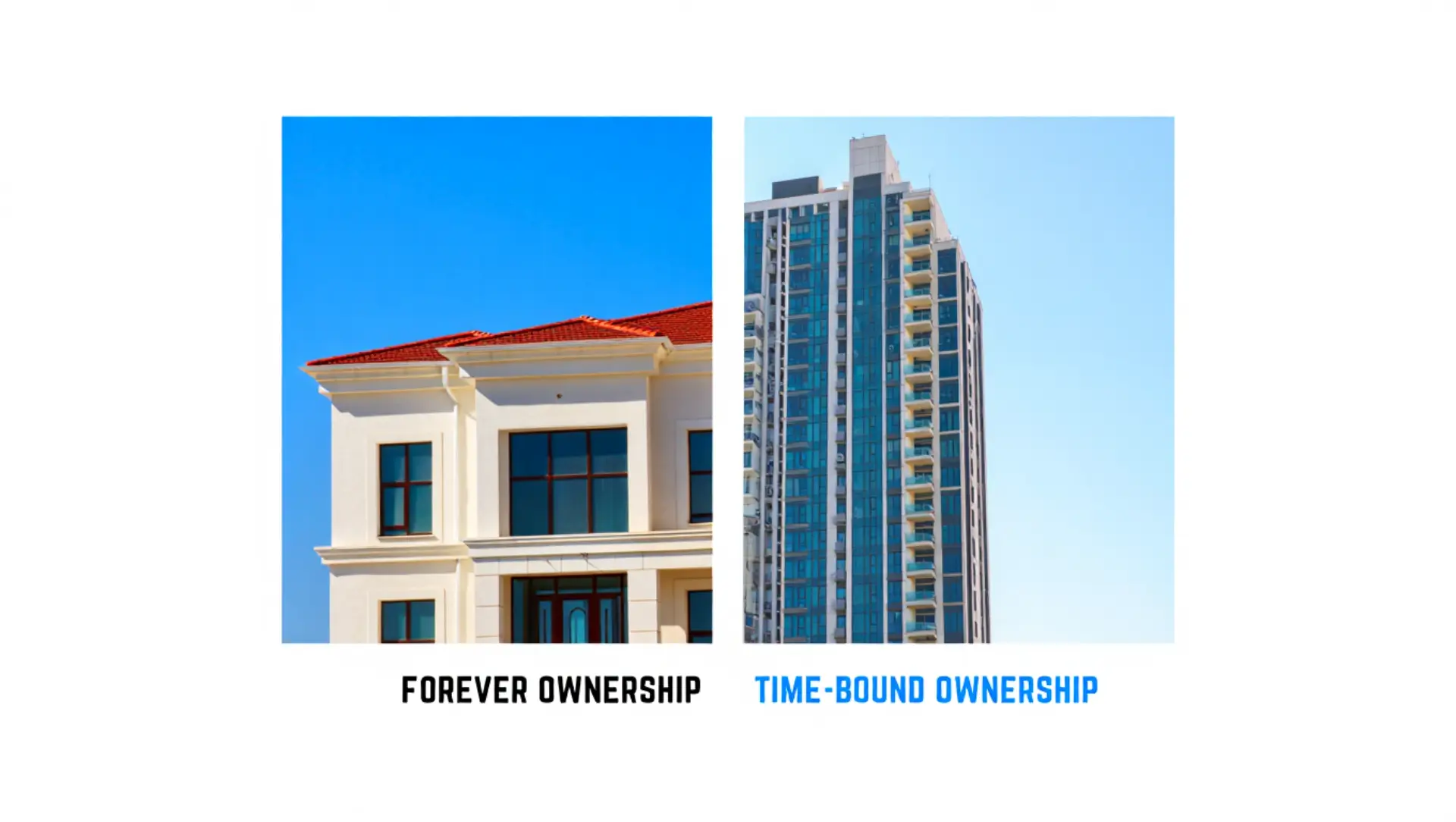
Freehold ownership means you own the property and the land underneath it, forever. You can sell it, mortgage it, renovate it, or leave it to your heirs without asking anyone’s permission. The designated freehold areas include most of Dubai’s prime real estate – Downtown, Marina, Business Bay, Palm Jumeirah. Property Monitor’s 2024 analysis showed freehold properties in these areas averaged 12.3% annual appreciation, compared to 8.7% for comparable leasehold properties.
Leasehold properties come with 99-year terms, which sounds like forever but creates complications for financing and resale. Banks treat leasehold properties differently – often requiring larger down payments or offering shorter loan terms. The initial purchase price is usually lower, but the long-term value equation gets murky as the lease term winds down. That said, leasehold properties often generate higher initial rental yields because of the lower entry cost.
The choice often comes down to investment timeline and strategy. Short-term investors sometimes prefer leasehold for the higher immediate yields and lower capital requirements. Long-term investors typically gravitate toward freehold for the appreciation potential and financing flexibility. Some sophisticated investors mix both types, using leasehold properties for steady income and freehold properties for wealth building.
One factor that’s easy to overlook: inheritance planning. Freehold properties transfer cleanly to heirs, while leasehold properties might face complications depending on remaining lease terms and freeholder policies. For investors thinking generationally, freehold usually makes more sense despite the higher initial cost.
Cost Analysis and Financial Planning Framework
Dubai property investment involves more costs than just the purchase price, but the total cost structure remains competitive with other international markets. The key is understanding all components upfront to avoid budget surprises that can derail investment plans.
Registration fees hit 4% of purchase price, technically split between buyer and seller but often absorbed entirely by buyers in practice. Real estate commissions run about 2% of purchase price. Mortgage fees vary but typically range from 0.5% to 1% of loan amount, plus property valuation fees of AED 2,500 to AED 5,000. These upfront costs are painful but predictable – budget 6-7% of purchase price for all fees and you’ll be covered.
Annual ownership costs depend heavily on property type. Apartment service charges range from AED 8 to AED 25 per square foot annually, covering everything from lobby maintenance to pool cleaning. Villa communities charge AED 15 to AED 35 per square foot for landscaping, security, and community amenities. These fees might seem high until you see what they cover – 24/7 security, gym facilities, swimming pools, landscaping that would cost a fortune to maintain privately.
Property management for rental properties typically costs 5-10% of annual rental income. Full-service managers handle tenant screening, lease negotiations, maintenance coordination, and financial reporting. For international investors, professional management isn’t optional – it’s essential for protecting your investment and maximizing returns during extended absences.
Dubai’s tax structure remains the crown jewel of international property investment. No personal income tax on rental income, no capital gains tax on property sales, no inheritance tax on transfers. The 5% VAT applies to new residential properties and some commercial transactions, but resale properties stay exempt. Compared to most international markets where taxes can consume 30-40% of investment returns, Dubai’s tax-free environment significantly boosts net yields.
Ready to move beyond research into actual investment? Contact Anika Property to develop a strategy that matches your goals and budget while navigating Dubai’s opportunities effectively.