Commonhold Property Mysteries Decoded: The Hidden Apartment Ownership Model Transforming Dubai Real Estate

If you’ve ever wondered why apartment ownership in Dubai seems mysteriously different from villa purchases, you’re encountering the enigma of property in Dubai ownership structures that confuse even seasoned investors. The core problem lies in the widespread misunderstanding of commonhold property – a unique ownership model that bridges the gap between absolute freehold control and limited leasehold arrangements, leaving thousands of potential buyers uncertain about their actual rights, ongoing obligations, and long-term investment prospects in what represents a $23 billion foreign-owned property market.
The Commonhold Enigma: Apartment Ownership Without Land Rights
Commonhold property in Dubai represents a sophisticated legal framework, what’s particularly important to understand, that grants apartment owners freehold rights over their specific units while excluding ownership of the underlying land. This distinction becomes crucial when examining the fundamental difference between purchasing a villa and acquiring an apartment in designated freehold zones.
The mechanics work like this: when you purchase a villa in Arabian Ranches or Emirates Hills, you receive complete ownership of both the building structure and the land beneath it. Your title deed from Dubai Land Department registers you as the “landowner” with unlimited rights to modify, renovate, or even demolish and rebuild within development guidelines. However, apartment ownership operates under an entirely different paradigm – you own your specific unit with the same freehold rights, but the land belongs collectively to all residents.
This creates, it must be noted, a shared ownership structure where common areas like lobbies, swimming pools, gardens, and parking facilities are jointly owned by all apartment holders. The legal framework ensures that commonhold owners enjoy identical rights to freehold villa owners regarding their individual units – they can buy, sell, rent, renovate (within building guidelines), and pass the property to heirs without time restrictions.
According to recent market data from Wise financial services, commonhold properties typically represent apartments while freehold villas include land ownership, explaining why budget investors can find affordable one-bedroom apartments in Jumeirah Village Circle averaging AED 644,000, while high-end buyers prefer stylish one-bedroom apartments in Downtown Dubai with average sales prices of AED 1.54 million. The pricing differential reflects not just location premiums but also the underlying ownership structure.
Central Bank of the UAE provides comprehensive guidelines on property financing structures that affect both commonhold and freehold ownership, particularly regarding mortgage requirements and foreign investment regulations.
The most significant operational difference between commonhold and traditional freehold ownership lies in the mandatory service charge structure that governs maintenance and upkeep of shared facilities. These charges, calculated on a per-square-foot basis, represent ongoing financial obligations that can substantially impact investment returns and monthly budgets.
Dubai Land Department‘s Service Charge Index reveals striking variations across different developments and locations. In International City, service charges average AED 7 per square foot annually, making it the most economical option for budget-conscious investors. Business Bay, Dubai Marina, and Jumeirah Lakes Towers command AED 15 per square foot respectively, while The Greens and Palm Jumeirah require AED 13 per square foot. The most expensive commonhold properties exist in Downtown Dubai, where Burj Khalifa residents pay an astronomical AED 72 per square foot annually.
These charges encompass multiple components that owners often underestimate during the purchasing process. Building maintenance covers electrical and plumbing systems, structural upkeep, and general repairs. Security services provide 24/7 protection across most high-end developments. Facilities management maintains amenities like gymnasiums, swimming pools, children’s play areas, and landscaping. Utility costs cover electricity, water, and cooling for common areas including hallways, elevators, and shared spaces.
Property management fees compensate professional companies for administrative tasks, resident complaint handling, and regulatory compliance coordination. Reserve fund contributions, often called sinking funds, accumulate resources for major repairs, renovations, or unexpected expenses like elevator replacement or facade restoration. A practical example demonstrates the financial impact: a 1,000-square-foot apartment in Downtown Dubai with AED 15 per square foot service charges costs AED 15,000 annually in maintenance fees – equivalent to AED 1,250 monthly on top of mortgage payments.
The transparency mechanism requires developers and owners’ associations to provide detailed invoices breaking down all expense categories. Property owners can access RERA’s Service Charge Index to compare fees across different projects and verify appropriate charging. However, non-payment consequences are severe, including restricted amenity access, legal action, and declining service quality that ultimately affects property values.
Geographic Distribution and Investment Hotspots
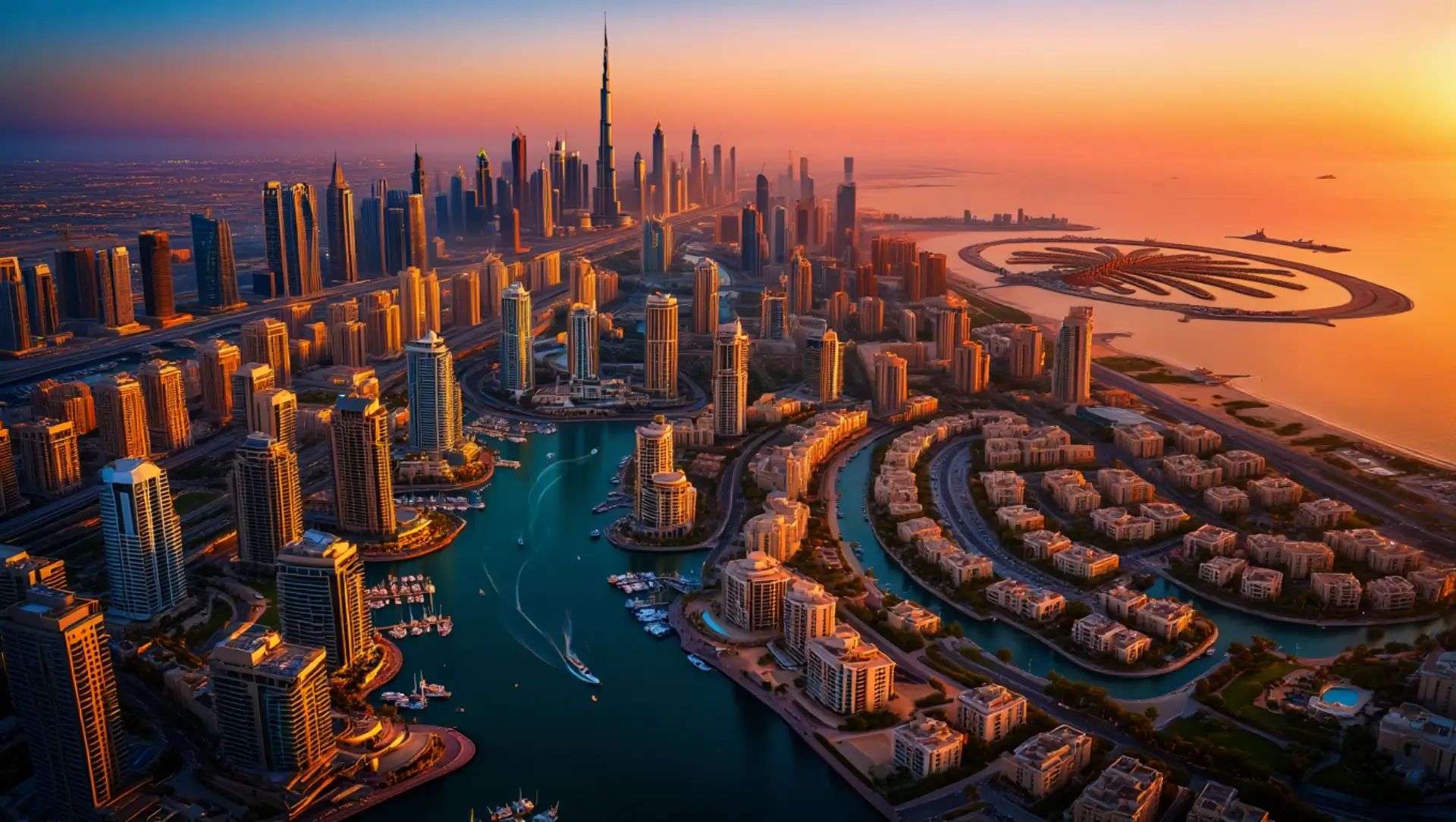
Commonhold properties concentrate in Dubai’s designated freehold areas, creating distinct investment opportunities across four primary regions that cater to different investor profiles and budget requirements. Western Dubai offers prestigious apartment communities in Dubai Marina and Bluewaters Island, where residents enjoy waterfront living with premium amenities but face higher service charges due to complex infrastructure requirements.
Central Dubai hosts the most valuable commonhold investments in Downtown Dubai and Business Bay, where proximity to major business districts and tourist attractions drives both rental yields and capital appreciation. Culture Village presents a more affordable alternative in this region, attracting investors seeking central location benefits without downtown premium pricing. Eastern districts include promising developments in Arjan and areas with emerging growth potential.
The investment mathematics vary significantly across these locations. Dubai Marina apartments with average prices of AED 3,633,984 show a 13.91% year-over-year decrease, indicating market correction opportunities for strategic buyers. Price per square foot increased 2.98% to AED 2,161, suggesting underlying demand strength despite headline price adjustments. Palm Jumeirah maintains its position as the most expensive region with apartments averaging AED 8,450,372, reflecting its unique appeal and limited supply.
Rental yield potential creates additional investment considerations for commonhold properties. Apartments typically generate 6-8% annual rental yields compared to 5-7% for villas, partly compensating for higher service charges through stronger income generation. Short-term rental opportunities in tourist-heavy areas like Dubai Marina and Downtown Dubai offer potentially higher returns for investors willing to manage active rental operations.
The demographic targeting also influences investment decisions. Young professionals and expatriate families often prefer apartment living due to amenities, security, and maintenance-free lifestyles, creating steady rental demand in properly located commonhold properties. However, families with children eventually transition to villas with private gardens and larger spaces, creating natural turnover that investors must factor into long-term holding strategies.
Legal Framework and Ownership Rights Comparison
The legal architecture governing commonhold property ownership draws from the Freehold Decree Law No. 7 of 2006, which established the fundamental framework for foreign property ownership while creating distinct categories for different property types. Under this legislation, commonhold apartment owners receive title deeds granting freehold rights over their specific units, but the legal structure explicitly excludes land ownership from individual apartment holders.
Dubai Land Department’s registration process treats commonhold owners as “unit owners” rather than “landowners,” creating important distinctions in legal rights and responsibilities. This classification affects renovation permissions, where apartment owners must obtain developer approval for structural modifications that might impact building integrity or neighboring units. Villa owners enjoy greater autonomy in property modifications, subject only to community guidelines and municipal building codes.
Inheritance rights remain identical between commonhold and freehold properties, allowing seamless transfer to family members without time restrictions or additional complications. The contractual agreements endure beyond the original owner’s lifetime, ensuring properties remain within family structures according to inheritance laws applicable to the owner’s nationality and residency status.
Residency visa eligibility applies equally to commonhold and freehold property owners, with the same investment thresholds determining qualification for various visa categories. Two-year investment visas require minimum AED 750,000 property purchases, while Golden Visas demand AED 2 million investments. The property type doesn’t influence visa approval – only the investment amount and compliance with additional eligibility criteria matter.
Financing options present minimal differences between commonhold and freehold properties, with banks evaluating loan applications based on property value, location, borrower creditworthiness, and development reputation rather than ownership structure. However, some lenders may apply different loan-to-value ratios for apartments versus villas based on liquidity and resale considerations.
Financial Analytics and Market Performance Metrics

Recent market analysis reveals compelling performance metrics that distinguish commonhold properties from their freehold villa counterparts across multiple investment criteria. Transaction volume data from Dubai Land Department shows commonhold apartments representing approximately 60% of foreign property purchases, reflecting their accessibility and lower entry barriers compared to luxury villas.
Capital appreciation patterns demonstrate interesting divergences between property types. Commonhold apartments in established areas like Dubai Marina and Downtown Dubai showed 4.2% annual appreciation over the past three years according to Valorem real estate analytics from June 2021, while freehold villas in Emirates Hills and Arabian Ranches achieved 6.8% appreciation during the same period. However, commonhold properties offered superior liquidity with average sale completion times of 45 days compared to 90 days for premium villas.
| Property Type | Average Price | Annual Appreciation | Rental Yield | Service Charges | Sale Duration |
| Commonhold Apartments | AED 1.2M – 8.4M | 4.2% | 6-8% | AED 7-72/sqft | 45 days |
| Freehold Villas | AED 2.8M – 35M | 6.8% | 5-7% | AED 0.89-7.86/sqft | 90 days |
The financing landscape shows distinct patterns for commonhold versus freehold investments. Down payment requirements typically remain consistent at 25% for residents and 50% for non-residents, but loan approval rates favor apartments due to standardized valuations and established comparable sales data. Mortgage terms average 15-20 years for apartments compared to 20-25 years for villas, reflecting lender risk assessments and property lifecycle considerations.
Return on investment calculations must factor ongoing service charges that significantly impact net yields. A AED 2 million apartment in Business Bay generating 7% gross rental yield (AED 140,000 annually) with AED 30,000 service charges produces 5.5% net yield. Conversely, a AED 5 million villa in Arabian Ranches with 6% gross yield (AED 300,000) and AED 14,000 service charges achieves 5.7% net yield, demonstrating how service charges can erode apartment investment advantages.
Start your commonhold property journey today. Understanding these ownership nuances positions you to make informed investment decisions in Dubai’s dynamic real estate market. Research specific developments using Dubai Land Department’s Service Charge Index, calculate total ownership costs including ongoing fees, and connect with Anika Property’s experienced consultants to navigate the complexities of commonhold property acquisition and maximize your investment potential in this unique ownership structure.