Busting Myths About the Dubai Real Estate Slowdown
Understanding the Mortgage Landscape in Dubai
Every week I get panicked calls from American and Emirati investors who’ve read yet another doom-laden headline about the “inevitable crash” of Dubai Real Estate. I can hear the worry in their voices – they’ve either just bought property or are about to, and now they’re questioning everything. Look, I get it. Market anxiety is real, especially when you’ve got skin in the game. But after years in this market, I’ve learned that what you read about Dubai’s property slowdown rarely matches what’s actually happening on the ground. This piece cuts through the noise with real market data and firsthand experience.
The Data Behind the Headlines
Headlines love drama, but numbers tell the truth. When publications throw around terms like “Dubai property slowdown,” they’re usually cherry-picking stats without proper context. Let’s look at what’s really happening:
Transaction volumes dropped 7.3% in Q1 2024 compared to the previous quarter. Sounds concerning, right? But here’s what those alarming articles don’t mention – those numbers were still 18.2% higher than Q1 2023. Some slowdown.
Yes, price growth has moderated from the insane 35-40% jumps we saw in prime areas during 2021-2022. But Dubai Land Department figures show overall prices still rose 14.8% in the past year. In what universe is 14.8% annual growth considered a “slowdown”? What we’re seeing is normalization, not decline.
The luxury segment, which critics love to declare “oversaturated,” saw transactions above AED 10 million increase 12% year-on-year. Palm Jumeirah prices rose 9.7% even with slightly fewer sales – showing strong value retention despite reduced volume.
Here’s a breakdown that shows what’s really happening in different market segments:
| Market Segment | Price Growth (YoY) | Transaction Volume Change (YoY) | Days on Market | Rental Yield |
| Luxury (10M+) | +9.2% | +12% | 78 (-5) | 4.2% |
| Mid-tier (2-7M) | +14.8% | +22% | 42 (-12) | 6.7% |
| Affordable (<2M) | +7.1% | -3% | 36 (+4) | 7.9% |
See the problem with those blanket statements about “the market”? There isn’t one Dubai property market – there are several, each behaving differently. The modest cooling in affordable housing looks nothing like the continued strength in mid-tier and luxury segments.
Supply-Demand Dynamics: The Real Story
“Oversupply will crash the market” – I’ve heard this same prediction recycled for a decade now. Supply matters in real estate, obviously, but the current situation isn’t what the doomsayers claim.
Yes, developers announced around 62,000 new units in 2023. Sounds scary until you realize these properties will be delivered over 3-5 years, not overnight. And let’s be honest – history shows about 30-40% of announced projects will face major delays or never materialize at all.
A client from New York recently called me in a panic about “market saturation” after reading about all these launches. We sat down and compared actual delivery schedules against population growth projections, and his entire perspective changed. With roughly 100,000 new residents arriving annually, Dubai needs about 30,000-35,000 new housing units each year – remarkably close to what’s actually being delivered once you factor in the inevitable delays and cancellations.
The visa reforms have been game-changers in ways many analysts completely miss. The Golden Visa program has brought in a whole new buyer category. Government data shows Golden Visa issuance jumped 52% last year, with property investment being the main qualification route. These aren’t speculative flippers – they’re end-users with long horizons who often remove properties permanently from the rental pool.
Dubai’s safe-haven status has fundamentally altered absorption capacity. Just last month, I helped a family move their entire real estate portfolio from a politically unstable European country to Dubai Marina and Downtown. This kind of wealth migration, which I call the “crisis premium,” creates demand that simply didn’t exist in previous cycles.
Price Growth vs. Affordability: A Balancing Act
The moderation in price growth is actually healthy – something we should welcome, not fear. Explosive price increases create unstable markets prone to painful corrections.
Let’s talk affordability. During the 2014 peak, Dubai’s price-to-income ratio hit a ridiculous 22:1. Today, despite several years of growth, it’s around 13:1. Still high compared to many markets, sure, but vastly more sustainable than during previous peaks.
Mortgage rates have climbed, following the Fed’s lead. Average rates have risen from 2.5% in early 2022 to about 4.7% now. This has certainly impacted buying power in some segments. But here’s what fascinates me – cash purchases now make up nearly 70% of Dubai property transactions, up from 52% in 2019. This high proportion of cash buyers means a substantial chunk of the market doesn’t even care about interest rates.
Rental yields remain surprisingly strong despite recent price increases. Average gross yields across Dubai hover around 6.5%, with areas like JVC and Dubai Sports City delivering over 8%. These numbers blow mature markets like London (3.4%) or New York (3.9%) out of the water. An investor from Chicago recently bought three apartments in Dubai Marina specifically because the rental yields made them cash-flow positive from day one – something increasingly rare in major global cities.
What we’re seeing isn’t a slowdown – it’s a welcome return to sustainable growth. I’d much rather see 8-12% annual increases that can be maintained long-term than explosive jumps followed by painful corrections.
Segmentation: Not All Areas Are Created Equalми
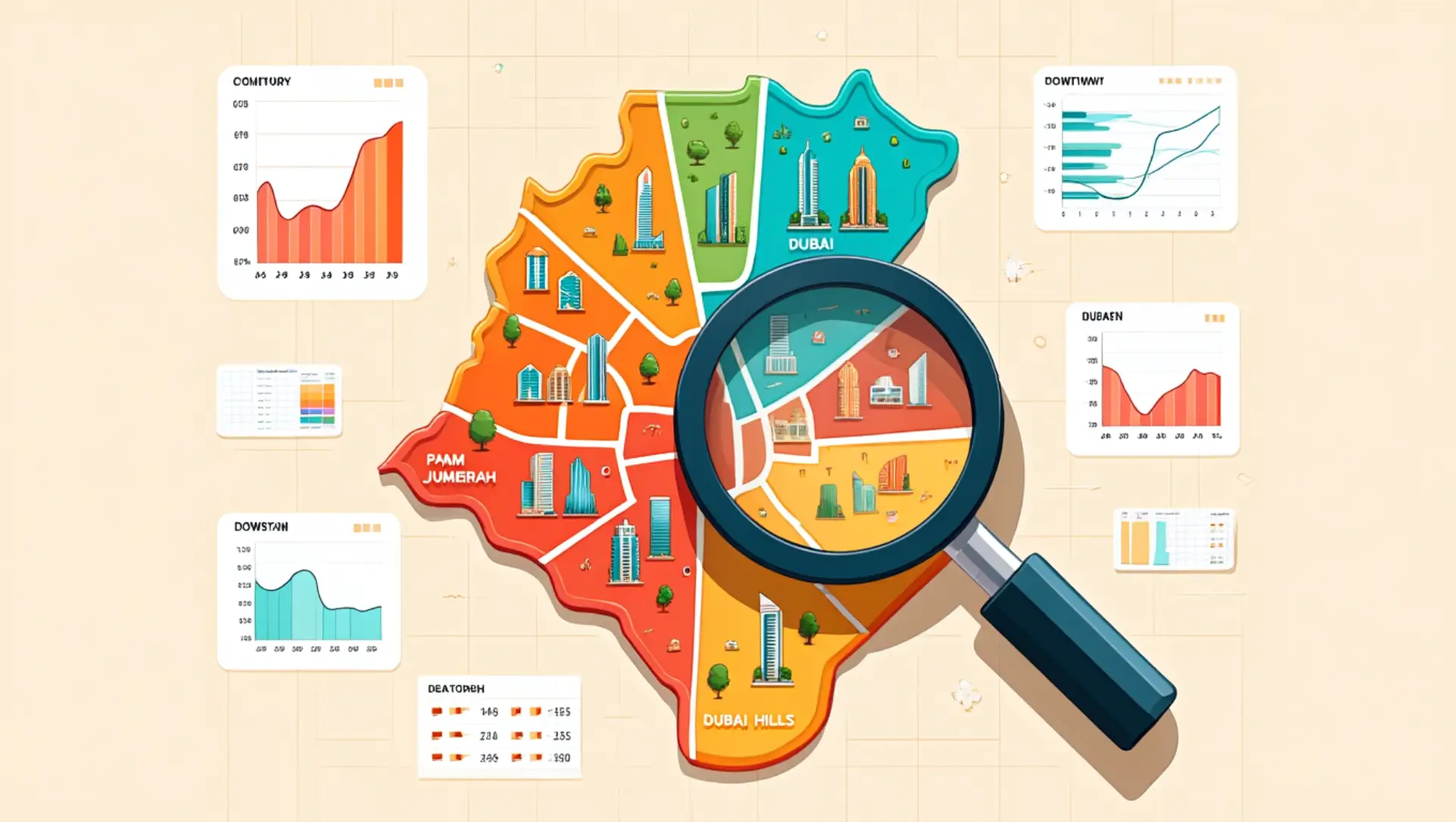
The biggest mistake in discussions about Dubai real estate is treating it as one unified market. Performance varies dramatically across locations and property types – another reason why those blanket “slowdown” claims are so misleading.
The established premium areas are showing remarkable resilience. Last month I sold a waterfront villa on Palm Jumeirah for 7% above comparable sales from just six months earlier. Does that sound like a market in retreat to you?
The mid-market segment – places like Dubai Marina, JLT, and Business Bay – has maintained healthy transaction volumes with less price volatility than either the luxury or affordable segments. This middle market is the backbone of Dubai’s property ecosystem, but it rarely makes headlines. A two-bedroom in Dubai Marina that I listed in February sold within 11 days with multiple offers – the same unit type that took 40-45 days to sell in 2022.
Off-plan properties have behaved completely differently from ready units throughout this cycle. While some developers have adjusted launch prices, completed properties in prime locations continue appreciating. This divergence shows the market has become more sophisticated in pricing risk – buyers want better value for taking on construction risk.
Distressed sales, often cited as evidence of weakness, remain surprisingly rare. Mortgage defaults, a key health indicator, are at historical lows. Banking sector reports show mortgage default rates in the UAE at just 3.2% in Q1 2024, down from 5.8% in 2019. That shows strong financial health among property owners despite global economic challenges.
Strategic Opportunities in a Maturing Market
For smart investors, today’s market offers opportunities that weren’t available during the frenzied growth of 2021-2023. You just need to look beyond the simplistic “boom or bust” headlines.
Buyers now have a bit more negotiating power in certain segments. During peak growth, sellers often received multiple above-asking offers within days. Today’s market allows more traditional negotiation, with prices often settling 3-5% below initial asking in the mid-market segment. This creates openings for value investors who couldn’t compete during the hyper-competitive peak.
Developer incentives have become more creative. Major developers like Emaar (established 1997, creators of Burj Khalifa) have introduced attractive payment plans to maintain sales momentum. These often include post-handover structures where 25-40% can be paid over 2-5 years after receiving the property. Several of my American clients have used these terms to let rental income partially finance their purchases.
Emerging areas offer compelling value compared to established locations. While Dubai Marina and Downtown still command premium prices, newer developments like Dubai South (around Al Maktoum International Airport) present stronger growth potential tied to major infrastructure projects. A client who bought in Dubai South early last year has already seen 16% appreciation as infrastructure timelines accelerated.
The robust rental market provides a safety net even if price growth moderates. With Dubai’s population continuing to grow and housing policies requiring residency for work, rental demand remains strong across all segments. Average occupancy rates stand at 88%, with prime areas exceeding 95%. This creates strong cash flow regardless of short-term price movements.
The Dubai real estate market is evolving, not declining. What we’re seeing is maturation of a market that’s outgrown its boom-bust reputation to become a sophisticated property ecosystem with distinct segments responding to different economic drivers. For investors willing to look beyond alarming headlines, the current market phase offers strategic entry points with attractive risk-adjusted returns.
The next time you read dire predictions about a Dubai property slowdown, remember to check the actual data, consider which market segment they’re talking about, and recognize that sustainable growth is strength, not weakness.